
Showing posts with label handheld. Show all posts

Thursday, May 7, 2009

Lighting the Fuse on Education's Big Bang

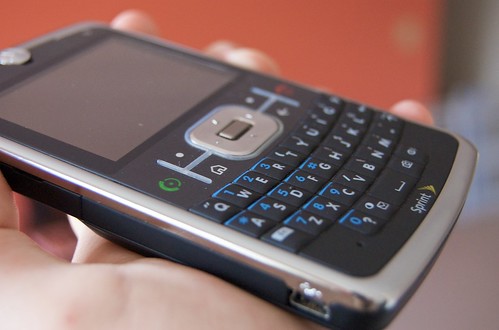
My nominee for Education's 'Big Bang', is an open partnership among hand-held computers; smart phones; data projection; and wireless networking.

Everyone in education seems to be in agreement that a significant change is necessary to ensure that learning remains relevant for future citizens. What no one seems to know, is:

What will be the catalyst that will launch schools into the future?


10 Reasons to light the fuse on networked mobile devices:

1] The tools for this change everything exist today... and at reasonable cost!

2] Wireless networking & data projection are cost effective, commonly understood connectors.

3] We can harness the ubiquitous hand-held devices that are already in kids' backpacks.

4] The rise of netbook computers is bringing the $100 laptop closer to reality.

5] Cloud computing is now a 'concrete' reality.

6] Student populations are eager for the adoption of the tools of their generation.

7] The number of teachers with an appetite for learning with modern tools continues to grow.

8] Whether using Skype, or USTREAM.tv, free two way broadcasting allows educators and students to leverage connections with classrooms around the world.

9] An expanding range of open source projects is providing a no-cost platform for creativity.

10] The blogosphere is awash with successful models for networked learning. In effect, we've written the textbook on how to embed the teaching of technology skills into performance based learning experiences.

The threat of viruses and the desire for network security seem to be the main concerns voiced by unyielding ICT departments, and though these concerns are valid, we are at a far greater risk of alienating entire learning communities by ignoring readily available tools, and restricting access to what many take for granted in their own homes, or at the local coffee shop.

The day that schools open their networks for sign-on by the devices used every day by students, parents and teachers, will be remembered as the birthday of Classroom 2.0. What will you do to help light the fuse?

What do you think? Can handheld devices help schools launch us into wondrously diverse learning experiences? Do you have another nominee for Education's 'Big Bang'?

Photo credit: pshutterbug/Prabhu

Sunday, April 27, 2008

Cell Phones in the Classroom

How is your school leveraging cell phone technology for student learning?

In the schools my children attend, mobile phones are not welcome. The regional district school board is jamming the genie back into the lamp, even though the use of handheld technology is ubiquitous in the real world. Rather than restrict the use of this technology, educators (and their students) would be better served, if they were actually to be encouraged to use this technology in their classrooms.


How can cell phones be used for education?


First, we have to realize that many cell phones have the many embedded tools: clock, calendar, camera, voice recorder, text messaging. Some cell phones also include access to the World Wide Web and GPS technology.

Recognizing that relatively few educators already leverage tools likeGooglemaps, Wikipedia, and today's Front page news.... How will we handle it when "all of the information in the world" arrives in student backpacks on a daily basis?

The inclination is to think of the Web as one way communication, but teachers need to recognize that handheld devices encourage participation in content creation as much as content consumption. The mobile phone provides the potential to teach about copyright; content creation; protection of privacy; ethical use and much more. So how do we go about teaching students about appropriate online participation?

Documenting Learning

Field trips, experiments, and other learning experiences can be shared with a global audience with camera phones (audio and/or video). Many ideas for using mobile phones can be found at The Mobile Learner, Wes Fryer's wiki, or Thinking Machine. Evolving tools like Jott and Utterz allow automatic voice to text posting to blogs, wikis, or social networks. If you already use Voicethread, you may be interested in the untethered use of this tool:


Liberty Science Centre in New Jersey, actually has exhibits that provide audio commenting through recordings available by phone call. Can students create such content? Can you see the day when road signs, historic markers, and public buildings include phone numbers to access information? What about copying such information to GoogleMaps?

Large Scale Mobile Learning


Abiline Christian University in Texas, provides students with iPhone technology. Many other post-secondary institutions like Berkeley, Stanford, Yale, Penn State, Texas A&M, Duke, Queens, MIT... are leveraging iTunes U. Will this soon be the norm? What about iTunes HS, or iTunes Elementary?!

What are we worried about?

Students filming lessons
? Students Googling to correct teacher errors? Students communicating with one another for social reasons? Whatever the concerns, the appropriate use of handheld computing technology needs to be modeled in the classroom. In preparing students for the real world, is teaching handheld technology skills more relevant than cursive writing; long division; spelling tests, the memorization of world capitals...?

More to follow on Monday's Teacher 2.0 Podcast.

Photo credit: Benjamin Golub