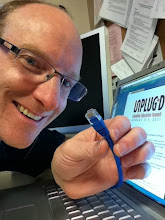
There was a time not too long ago, when I was lonely in my professional life. Although I felt that I was doing really good work in the area of gifted education, few of my local colleagues had any idea of the work I was doing. It was only when I had the opportunity to meet face-to-face with regional gifted education specialists, that I felt connected to a tribe. Kindred spirits who truly understood what I was going through, began to share resources and strategies and to collaborate in the delivery of regional events for gifted learners.
A few years later I found myself in a newly created provincial role, assisting district school boards in leveraging e-learning tools. My tribe was small, with six widely scattered teachers attempting to do the same work across the province of Ontario. Our team stayed in touch with weekly meetings that always included a few minutes sharing personal and familial stories. Although we only met face to face a half dozen times in the two years I was in the role, I continue to feel a deep sense of connection with these colleagues.
One of my local tribe-mates, Jim Pedrech, is a talented teacher who until recently was unaware that he had many peers who were engaged in similar missions, sharing relevant and compelling learning experiences with students. Today, Jim pointed me to a talk that highlights the value of working and learning with a cadre of compadres.
In this TEDxUSC video, Rodney Mullin tells the story of a skateboarding tribe that builds on the creative work of members in order to ensure the collective moves forward. In many ways the work of these individuals mirrors the work many of us are engaged in when we share the triumphs and tragedies taking place in our classrooms. If you can't spare the time for this entire video, jump to this point... but hear the word 'teachers' when he says the word 'skaters'.
In classrooms all around the world, innovators are doing creative work engaging apt tools to help their students learn relevant skills... and they're doing so alone. Many have yet to discover who their peers are, let along to connect with them in meaningful ways. While a wide range of social media tools now allow such teachers to find one another, most have no idea who their tribemates are. The most lonely, may be those who have discovered true peers in this online world, but who rarely if ever have opportunities to meet face-to-face with their recently discovered colleagues. The lucky few who have intermittent opportunities to engage in conversations and face-to-face meetings, should not take for granted such connective opportunities.
One of my distant colleagues, David Truss has been thinking about the difference between his online self, his real world self. David's words ring more true for me than they otherwise might, in large part thanks to numerous face-to-face conversations we were able to share at the recent Connected Canada Conference: "The point is that we are sharing more and more of ourselves online and that ‘person’ that we share online is becoming a bigger & bigger part of who we really are."
I think that the more comfortable we become within a community of online peers, the more we let our true selves leak into the community. Our voices become more authentic, our lives become more transparent, and our relationships become more meaningful. Just as skateboarders push the boundaries of what is possible by sharing within a tight-knit community, once lonely teachers who might otherwise push boundaries in secret, are becoming kindred spirits and members of a growing tribe.
Showing posts with label pd. Show all posts
Showing posts with label pd. Show all posts
Saturday, June 16, 2012

Monday, April 23, 2012
#LitSchool: The Power of Choice
Serendipitous learning happens every time I dip my toe into the Twitter stream. Although I never know what I'm going to discover, I know I'm going to learn something. Today, I found myself following tweets from Toronto where a literacy unconference was taking place. While teacher-learners around the globe have made time on their own to attend edcamps and other informal professional learning events, it came as a welcome surprise that this highly engaging professional learning was taking place during the school day!
Tweeting educators from the York Region DSB used the hashtag #litschool to share their learning with us, and to allow us to engage from a distance. On site, topics that would frame the day's learning were developed by the participants who soon had a schedule to choose from.
From a few storified tweets, you can sense the engagement of learners who were present both physically and virtually.
In an age where professional learning is often dictated from above, it is refreshing to see a district school board model risk-taking. By allowing a model of inquiry to be experienced first hand, there is an even greater chance that teachers will take steps towards bringing such engaging practices to their classrooms.
#nicemodel #wecandoit #letuslearn #giveuschoice
Followup reading: Is the PD Day Broken?
Tweeting educators from the York Region DSB used the hashtag #litschool to share their learning with us, and to allow us to engage from a distance. On site, topics that would frame the day's learning were developed by the participants who soon had a schedule to choose from.
From a few storified tweets, you can sense the engagement of learners who were present both physically and virtually.
In an age where professional learning is often dictated from above, it is refreshing to see a district school board model risk-taking. By allowing a model of inquiry to be experienced first hand, there is an even greater chance that teachers will take steps towards bringing such engaging practices to their classrooms.
#nicemodel #wecandoit #letuslearn #giveuschoice
Followup reading: Is the PD Day Broken?
Saturday, March 3, 2012
Which Connections Matter Most?
Over the past week, I've been trying to come to terms why Jabiz Raisdana's recent post, Be More Interesting, resonated so authentically for me. Although many of my colleagues differentiate their relationships depending on whether they take place in virtual spaces or in the physical world, my personal experience tells me that it is the blending of these two worlds that makes for the most meaningful connections of all. Having invested so much time and attention to my own networked learning, I find myself relishing the deepest of these professional learning connections (For more on this idea, see Deeper Connections Matter More).
Multiple interactions over time, when blended with occasional face-to-face meetings, results in a familiarity one might not expect. Now that technology has made it possible for both online and real world conversations to take place face-to-face, ongoing intellectual relationships might grow to be perceived as emotional connections. The more we come to know our online colleagues, the more we come to care about them. In many ways, these relationships of choice are more tantalizing than those relationships we experience by the coincidence of a shared staffroom.

After thinking, sketching, and thinking some more, I created a diagram to help me make sense of the professional learning connections I've made in recent years. Although the actual placement of items on the grid varies depends on many factors, it's clear that my relationships with those I've met face-to-face or voice-to-voice, tend be the deepest both intellectually and emotionally. Online colleagues like Jabiz, challenge me to think more deeply than most, in large part because I can see his gestures and hear his voice when I read his words.
Have we met face to face? If so, does it change the way you read this post? Which professional conversations are most compelling to you? Do your online relationships matter more or less than your relationships with local colleagues? Can you differentiate between those connections you make on the basis of an intellectual connection, and those where you feel emotionally invested?
Multiple interactions over time, when blended with occasional face-to-face meetings, results in a familiarity one might not expect. Now that technology has made it possible for both online and real world conversations to take place face-to-face, ongoing intellectual relationships might grow to be perceived as emotional connections. The more we come to know our online colleagues, the more we come to care about them. In many ways, these relationships of choice are more tantalizing than those relationships we experience by the coincidence of a shared staffroom.
After thinking, sketching, and thinking some more, I created a diagram to help me make sense of the professional learning connections I've made in recent years. Although the actual placement of items on the grid varies depends on many factors, it's clear that my relationships with those I've met face-to-face or voice-to-voice, tend be the deepest both intellectually and emotionally. Online colleagues like Jabiz, challenge me to think more deeply than most, in large part because I can see his gestures and hear his voice when I read his words.
Have we met face to face? If so, does it change the way you read this post? Which professional conversations are most compelling to you? Do your online relationships matter more or less than your relationships with local colleagues? Can you differentiate between those connections you make on the basis of an intellectual connection, and those where you feel emotionally invested?
Wednesday, February 1, 2012
Roll Down the Windows
Every day brings changes to our world. Tools evolve; ideas emerge; projects are born. Through your personal learning network, you are already immersed in this change; but what about everyone else?
Your face-to-face colleagues may not truly understand it, but by now, they probably realize that you are part of some larger learning community. I like to suggest that it's time to take these colleagues by the hand, and to introduce them to this dynamic online world of professional learning. The good news is that there is an easy, and not-so-intimidating way to do it.
 Like a dog in a car, the world just whizzes by, seemingly beyond our control. Even so, we choose to participate. We engage in conversations that matter. We keep informed about what our colleagues are doing. We amplify the best ideas we encounter. We share.
Sadly, many of our colleagues are so immersed in the day to day experience, that they may as well be riding along behind tinted windows that are rolled up tight. Focusing only on the path they're on, most of our fellow teachers have no idea of the range of thought-provoking conferences, collaborative projects, or innovative tools that are just outside the window.
How do we best introduce teachers to the test pilots among us who are creating and sharing a new vision for education?
 My number one suggestion, is to invite your co-workers to roll down the windows in order to get a sense of what's happening in connected classrooms around the corner, and around the world. It's easier than you might think.
You don't have to share a new teaching strategy.
You don't have to impress with the latest gadgets or web tools.
You don't have to coach the development of personal learning networks.
You don't have to introduce Twitter, or hashtags, or social media.
You don't need to teach about curation or subscriptions.
Begin by rolling the window down just a crack, and your colleagues can experience a world of continuous learning. Here are just a few ways to introduce your fellow teachers to people and ideas that inspire.
1. Share the link to one crowd-sourced online newspaper.
The Tweeted Times is where I get my morning fix for the stories I may have missed the previous day. Another I visit for stories shared by my Ontario colleagues, is Doug Peterson's: The Best of Ontario-Educators Daily.
2. Point colleagues to one news feed.
Here, educators can read engaging stories that highlight the thinking of fellow change agents. The stories change every day, but the link stays the same.
3. Share a link to one of the pages you use to collect bookmarks.
Your entire bookmark library may be of interest, but you might also share only a specific tag like 'classrooms of tomorrow'. When you find something, they'll know where its at.
4. Point app-lovers to one education news aggregator.
A few years ago, I developed 'Clever App', a tool I use to access the news from my PLN at least a few times each week.
5. Send your friends to one great blog each week.
If you're a regular reader of blogs, why not share the feeds to some of your favourite writers?
6. Email one story a day.
You have access to dozens, but a teacher who never seems to have the time, might get hooked on one a day if you choose wisely.
7. Pro tip: Automate
If you have yet to discover If This, Then That, you might be interested to know that you can automate delivery of news to your colleagues. If you tweet a link, have it automatically posted to your delicious feed or to your blog. If you bookmark a resource, have IFTTT automatically email it to your friends.
 Once they get a breeze in their hair, your colleagues might be eager to join teachers far and wide are learning and sharing everyday. On their very own, they may wind that window all the way down and ask you how they might more deeply engage in this world. It's then that Twitter, blogging, and personal learning networks might become part of the conversation.
What's holding you back? Go ahead and share one resource might lead a teacher to make a habit of professional reading every day. If you roll down the window, your colleagues may well engage in conversation across the hallway... or around the globe! It doesn't have to be overwhelming, just choose a simple way to share the powerful connections you've already discovered.
Photo credits: Zilla in the Car by Vagabond Shutterbug; Sheep in a Truck by smcgee; Coaster rider by Fellowship of the Rich
Your face-to-face colleagues may not truly understand it, but by now, they probably realize that you are part of some larger learning community. I like to suggest that it's time to take these colleagues by the hand, and to introduce them to this dynamic online world of professional learning. The good news is that there is an easy, and not-so-intimidating way to do it.
 Like a dog in a car, the world just whizzes by, seemingly beyond our control. Even so, we choose to participate. We engage in conversations that matter. We keep informed about what our colleagues are doing. We amplify the best ideas we encounter. We share.
 Sadly, many of our colleagues are so immersed in the day to day experience, that they may as well be riding along behind tinted windows that are rolled up tight. Focusing only on the path they're on, most of our fellow teachers have no idea of the range of thought-provoking conferences, collaborative projects, or innovative tools that are just outside the window.
How do we best introduce teachers to the test pilots among us who are creating and sharing a new vision for education?
 My number one suggestion, is to invite your co-workers to roll down the windows in order to get a sense of what's happening in connected classrooms around the corner, and around the world. It's easier than you might think.
You don't have to share a new teaching strategy.
You don't have to impress with the latest gadgets or web tools.
You don't have to coach the development of personal learning networks.
You don't have to introduce Twitter, or hashtags, or social media.
You don't need to teach about curation or subscriptions.
Begin by rolling the window down just a crack, and your colleagues can experience a world of continuous learning. Here are just a few ways to introduce your fellow teachers to people and ideas that inspire.
1. Share the link to one crowd-sourced online newspaper.
The Tweeted Times is where I get my morning fix for the stories I may have missed the previous day. Another I visit for stories shared by my Ontario colleagues, is Doug Peterson's: The Best of Ontario-Educators Daily.
2. Point colleagues to one news feed.
Here, educators can read engaging stories that highlight the thinking of fellow change agents. The stories change every day, but the link stays the same.
3. Share a link to one of the pages you use to collect bookmarks.
Your entire bookmark library may be of interest, but you might also share only a specific tag like 'classrooms of tomorrow'. When you find something, they'll know where its at.
4. Point app-lovers to one education news aggregator.
A few years ago, I developed 'Clever App', a tool I use to access the news from my PLN at least a few times each week.
5. Send your friends to one great blog each week.
If you're a regular reader of blogs, why not share the feeds to some of your favourite writers?
6. Email one story a day.
You have access to dozens, but a teacher who never seems to have the time, might get hooked on one a day if you choose wisely.
7. Pro tip: Automate
If you have yet to discover If This, Then That, you might be interested to know that you can automate delivery of news to your colleagues. If you tweet a link, have it automatically posted to your delicious feed or to your blog. If you bookmark a resource, have IFTTT automatically email it to your friends.
 Once they get a breeze in their hair, your colleagues might be eager to join teachers far and wide are learning and sharing everyday. On their very own, they may wind that window all the way down and ask you how they might more deeply engage in this world. It's then that Twitter, blogging, and personal learning networks might become part of the conversation.
 What's holding you back? Go ahead and share one resource might lead a teacher to make a habit of professional reading every day. If you roll down the window, your colleagues may well engage in conversation across the hallway... or around the globe! It doesn't have to be overwhelming, just choose a simple way to share the powerful connections you've already discovered.
Photo credits: Zilla in the Car by Vagabond Shutterbug; Sheep in a Truck by smcgee; Coaster rider by Fellowship of the Rich
Sunday, January 23, 2011
Do You Have Time for a "31 Day Game"?
 When I returned from Educon in 2010, I had an idea that has now had a chance to percolate for a full year. It's an idea that attempts to focus the thinking of a networked educators, providing us with common reference points for personal and professional learning. With the goal of further enhancing the toolkit for tweeting teachers, I have a proposal for the first ever professional learning game or PLG.
 "What if..."
In introducing Twitter to colleagues, would it be useful to have access to a wide range of articles, videos and presentations that had been considered by the network to be worthy of deeper reflection? Might a month-long debate regarding the potential of educational resources allow educators to demonstrate critical thinking, inventiveness and openness? What will happen if teachers around the world are invited to participate in a common asynchronous conversation? Wouldn't it be great for teachers to be able to point to a specific body of knowledge and resources that were known to just about every teacher on Twitter?
 Each day during the month of March, I propose that we consider two competing resources before ultimately voting for one of these tools to advance in a head-to-head playoff format. The 31 Day Game would culminate with a head-to-head competition among the top resources... on the 31st day of the month.
 The game can be played at any hour of the day, but would only take place during a month that has 31 days. Each game would have room for the collaborative consideration of 32 topics. Future events might include:
1] a critical review of Web 2.0 tools;
2] a contest to select an 'Educator's Choice' book for a PLN book club; or
3] a fun head-to-head tweeting competition.
It all begins March 1st, but not until we narrow down the field to 32 Compelling Messages for Teacher-Learners. Nominate your favourite video, news story, or blog post by competing this short survey.
Over the past few years, we've seen educators make outstanding use of Twitter for personal and professional learning. Maybe you were around when we organized the first synchronous chats for education? Whether or not you've participated in time-specific chats, what do you say to taking it up a notch with the 31 Day Game!
Photo Credit: Leo Reynolds; ex_libris
Wednesday, December 1, 2010
Expanding the PLN Playbook
I couldn't help but smile as I read George Siemens' 'most awesomest' commentary about PLNs. Exactly a year ago I wrote a shorter but similarly themed post, asking teacher-learners to see themselves as 'collaborators'.
As a learner who is passionate about leveraging the passion and expertise among a diverse population of connected educators, it's reassuring to see more and more evidence of collaboration among edu-tweeps.

While folks new to Twitter, often reference their interactions as the "greatest professional learning experience ever", we need to recognize this public sharing environment as a first step into transparent professional development.

Maybe Twitter can be seen as the entry drug to more significant network collaboration? In all likelihood, it will take leaders to create opportunities beyond synchronous Educhat conversations, in order to remind educators that professional learning can be amplified by reaching beyond 140 characters.
To that end, what are you doing to create the next EDUCON, MOOC, or TEDx? Are you modeling risk and reaching beyond your comfort zone? How are you contributing to the evolution of our professional learning playbook?
Me? I'm working with an incredible team to breathe life into an event that promises to model collaboration on a scale that's never before been attempted; but that's story for the new year. ;-)
As a learner who is passionate about leveraging the passion and expertise among a diverse population of connected educators, it's reassuring to see more and more evidence of collaboration among edu-tweeps.

While folks new to Twitter, often reference their interactions as the "greatest professional learning experience ever", we need to recognize this public sharing environment as a first step into transparent professional development.

Maybe Twitter can be seen as the entry drug to more significant network collaboration? In all likelihood, it will take leaders to create opportunities beyond synchronous Educhat conversations, in order to remind educators that professional learning can be amplified by reaching beyond 140 characters.
To that end, what are you doing to create the next EDUCON, MOOC, or TEDx? Are you modeling risk and reaching beyond your comfort zone? How are you contributing to the evolution of our professional learning playbook?
Me? I'm working with an incredible team to breathe life into an event that promises to model collaboration on a scale that's never before been attempted; but that's story for the new year. ;-)
Tuesday, November 23, 2010
Incubating Change
I've been in discussions with colleagues in my school about setting up a wing of our school to be a Teaching With Information Technology zone. Ideally, we'd begin with 3-5 teachers representing a range of subject disciplines, who would teach from classrooms equipped with mounted data projection; a bank of sharable notebook computers; a set of handheld devices; a few cameras; and wireless Internet access.

With my office being located just around the corner, I would act as a resource and team-teaching ally, assisting students and teachers in leveraging modern learning tools. We could have students host guest speakers via Skype; produce and publish multimedia content; participate in collaborative projects with international colleagues; and much more.
During this year of teaching and learning on TWIT lane, we would teach with open doors to model transparency for students, teachers, and visitors alike. Participating teachers would act as collaborative supporters for one another, and would benefit from regularly scheduled planning and debriefing sessions. The following year, a new cohort of teachers could set up shop, with the previous year's pilot teachers acting as mentors.
 I'm rather excited about the prospect of working collaboratively with teacher-learners in modern classrooms, but I'm not so sure that TWIT corridor has much of a ring to it. Can you suggest a more apt name for our incubation zone? Do you know of similar projects that we might learn from? Might you be able to play an active role in supporting us?
--- Late Addition ---
We've settled on the name 'TEL-Wing' for the cluster of Technology Enhanced Learning classrooms now under development.
Photo Credits: shapeshift; Timothy K. Hamilton

With my office being located just around the corner, I would act as a resource and team-teaching ally, assisting students and teachers in leveraging modern learning tools. We could have students host guest speakers via Skype; produce and publish multimedia content; participate in collaborative projects with international colleagues; and much more.
During this year of teaching and learning on TWIT lane, we would teach with open doors to model transparency for students, teachers, and visitors alike. Participating teachers would act as collaborative supporters for one another, and would benefit from regularly scheduled planning and debriefing sessions. The following year, a new cohort of teachers could set up shop, with the previous year's pilot teachers acting as mentors.
 I'm rather excited about the prospect of working collaboratively with teacher-learners in modern classrooms, but I'm not so sure that TWIT corridor has much of a ring to it. Can you suggest a more apt name for our incubation zone? Do you know of similar projects that we might learn from? Might you be able to play an active role in supporting us?
--- Late Addition ---
We've settled on the name 'TEL-Wing' for the cluster of Technology Enhanced Learning classrooms now under development.
Photo Credits: shapeshift; Timothy K. Hamilton
Sunday, November 14, 2010
Learning in E-lationship
There was a conversational buzz that dominated the ECOO2010 conference experience. It began with ""Hey, I know you..."
Ed-tech conference attendees across North America, are experiencing conference events with networked colleagues, on a level never before seen. This past week, a great number of Ontario educators (and a few out-of-province tweeps) were energized to meet face-to-face with members of their personal/professional learning networks.
 It's been a relatively short time since Twitter has been embraced by e-literate educators, but this tool has become a major difference-maker in the spread of good ideas. Conference attendees are readily self-identifying by Twitter ID, and are cross-pollinating their networks by introducing their 'followers' to colleagues.
To their full credit, the ECOO organizing team made a concerted effort to engage participants in the use of Twitter as a networking tool. Throughout the conference, attendees had opportunities to engage in back-channel discussions, to join in a Twitter scavenger hunt, and to attend a Super Tweet-up event.
I've written before about the critical role of the fourth 'R', but now I'm thinking of spelling Relationship in a new way. The positive vibes that result when meeting e-learning colleagues, might as well be referenced as 'elation-ship' or 'e-lationship'. It's difficult to explain to the disconnected, but it is empowering and invigorating to engage in first time face-to-face conversations, with familiar co-learners.
As part of my commitment to attend ECOO2010, I agreed to deliver in a Pecha Kucha talk during the last day of the conference. I couldn't have chosen a more apt topic: 'Twenty Things I've Learned in Twitter'.
It used to be that conference-goers could count on meeting peers who shared their passions and interests, but in 2010, conference attendees are counting the opportunity to meet with fellow tweeps, as the most rewarding part of the conference experience.
In assuming that you're already on Twitter, I'd be interested in your take. If you've yet to join us in shared learning year-round, what are you waiting for?
Ed-tech conference attendees across North America, are experiencing conference events with networked colleagues, on a level never before seen. This past week, a great number of Ontario educators (and a few out-of-province tweeps) were energized to meet face-to-face with members of their personal/professional learning networks.
 It's been a relatively short time since Twitter has been embraced by e-literate educators, but this tool has become a major difference-maker in the spread of good ideas. Conference attendees are readily self-identifying by Twitter ID, and are cross-pollinating their networks by introducing their 'followers' to colleagues.
To their full credit, the ECOO organizing team made a concerted effort to engage participants in the use of Twitter as a networking tool. Throughout the conference, attendees had opportunities to engage in back-channel discussions, to join in a Twitter scavenger hunt, and to attend a Super Tweet-up event.
I've written before about the critical role of the fourth 'R', but now I'm thinking of spelling Relationship in a new way. The positive vibes that result when meeting e-learning colleagues, might as well be referenced as 'elation-ship' or 'e-lationship'. It's difficult to explain to the disconnected, but it is empowering and invigorating to engage in first time face-to-face conversations, with familiar co-learners.
As part of my commitment to attend ECOO2010, I agreed to deliver in a Pecha Kucha talk during the last day of the conference. I couldn't have chosen a more apt topic: 'Twenty Things I've Learned in Twitter'.
20 Things I Learned in Twitter
View more presentations from Rodd Lucier.
It used to be that conference-goers could count on meeting peers who shared their passions and interests, but in 2010, conference attendees are counting the opportunity to meet with fellow tweeps, as the most rewarding part of the conference experience.
In assuming that you're already on Twitter, I'd be interested in your take. If you've yet to join us in shared learning year-round, what are you waiting for?
Tuesday, August 3, 2010
Mac Mini-camp
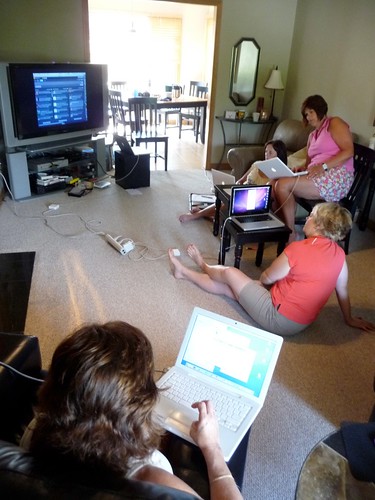 This week, I hosted four colleagues for a full day of hands-on learning intended to help novice geeks to get the most of their Mac computers. Contrary to traditional large group PD, this audience had the luxury of going in any of a number of directions, and could do so at a comfortable pace.
 I fielded a number of queries about this informal PD through via Twitter, so here are my top 10 discoveries from a day of learning with friends:
1] You can use a large screen television as a projection device.
2] Although the operating system is simple to navigate, there are simple tricks that you may take for granted that may be greatly valued by your colleagues.
3] Small changes to System Preferences can allow any user to be more productive.
4] Individual needs are much easier to address in a small group meeting than they are in traditional PD. (I.e., A teacher with a new external hard drive invited us to explore how to use Time Machine to backup files.)
5] If you use Skitch, ctrl+shift+5 is the new ctrl+shift+4
6] Teachers can have fun with Skype by contacting folks in the same room; and you can demonstrate the power of this collaborative tool by inviting guest experts to dial in to share their expertise. Thanks @BrendaSherry, @KellyPower & @IainRobertson!
7] Delicious is a great tool to introduce teachers to the power of the hive mind.
8] Engaging in conversation within a PD session is a good thing. How else can folks teach one another and share their giddy love of learning?
9] This type of learning should be taking place on a regular basis. The consensus from participants was that we should schedule follow-up meetings. First on our next agenda: "So, What happened?"
10] Teacher-learners are happy to share food in exchange for tech tips!
Wednesday, May 26, 2010
What We Learned from WWYD?
If you've had a chance to review recent posts on the theme: 'What Would Yoda Do?', you may have noticed some trends in the content we harvested. In the past few days, Ben Hazzard, Kathy Hibbert and myself, have taken some time to consider a host of #wwyd tweets, and we've summarized our findings in the document below.
A number of themes came to light as this crowd-sourced document evolved, and as is regularly the case, we learned as much from the process as we did from the product. We think there is some real Jedi wisdom in the way we were able to leverage social media tools to represent a collective vision of teacher professional development.
Our findings are much easier to read via the 'Fullscreen' option. If you have the time, we'd love to know what you think...
What Would Yoda Do? A Jedi Approach to Professional Development
A number of themes came to light as this crowd-sourced document evolved, and as is regularly the case, we learned as much from the process as we did from the product. We think there is some real Jedi wisdom in the way we were able to leverage social media tools to represent a collective vision of teacher professional development.
Our findings are much easier to read via the 'Fullscreen' option. If you have the time, we'd love to know what you think...
What Would Yoda Do? A Jedi Approach to Professional Development
Monday, May 24, 2010
Jedi Wisdom and Teacher P.D.
Over the past few days, we've collected a wide range of submissions with ideas about how educator professional development might be re-imagined. Using the Twitter tag #wwyd, educators near and far have shared their widsom, 140 characters at a time.
Although we've yet to finalize the product we'll be submitting for publication with the Journal of Curriculum and Pedagogy, you may be interested in reviewing the creative posters developed under the direction of our collaborators.
Content embedded within this project is open for use, remix, and sharing via Creative Commons. Whether downloading select slides to prime workshop thinking; sharing sample slides as models to develop a similar resource; or using the entire slidedeck to promote critical thinking, we hope this project will prod teacher-learners to pursue rich, relevant, professional learning.
Although we've yet to finalize the product we'll be submitting for publication with the Journal of Curriculum and Pedagogy, you may be interested in reviewing the creative posters developed under the direction of our collaborators.
What Would Yoda Do?
View more presentations from Rodd Lucier.
Content embedded within this project is open for use, remix, and sharing via Creative Commons. Whether downloading select slides to prime workshop thinking; sharing sample slides as models to develop a similar resource; or using the entire slidedeck to promote critical thinking, we hope this project will prod teacher-learners to pursue rich, relevant, professional learning.
Monday, May 17, 2010
What Would Yoda Do?
Reflecting On and Imagining Professional Development for Teachers in the Digital Age
A recent ‘call for submissions’ by the Journal of Curriculum and Pedagogy, prompted three of us interested in the influence of ‘the digital’ on curriculum and pedagogy to convene a meeting and discuss how we might contribute to this conversation. Individually, we work in our own contexts (schools, school districts and university settings) to navigate the amorphous digital culture in ways that allow us to integrate emerging technologies into our classrooms and our professional lives in purposeful ways.
We decided that in many ways, a ‘call for submissions’ was really the academic version of crowdsourcing amongst a community of scholars. With that in mind, we have elected to further crowdsource the ‘call’ in the form of a question posed to our broader community of educational colleagues, thereby leveraging our various social media networks in ways that embody cultural participation and co-creation. As such, all participants will be viewed not as ‘subjects’ of a study but as co-authors of the resulting product.
A framework has been developed in order to focus the contributions around the status of professional development in education. In keeping with the spirit of ‘embodied practice’, we aim to create a slideshare presentation by remixing the content provided by participants. Embracing the participatory culture afforded through networked communication, we are starting with the simple question: What Would Yoda Do?

To this end, we invite members of our collective social networks to participate on or before Saturday, May 22, 2010:
Step 1: Review images shared by Stéfan through Creative Commons on Flikr called Stormtroopers 365.
Step 2: Consider a caption, comment, quote, or personal words of wisdom for one or more of the photographs that reflects:
· Current ‘pet peeves’ you have with current professional development experiences;
· Possibilities for re-imagining professional development that is socially and intellectually engaging.
Step 3: Tweet your caption, comment, quote, or personal words of wisdom on the topic of 'professional development' using the hashtag #wwyd
Note: Rather than restating a favourite quote from another source, we're looking for original messages.
Step 4: Tweet a link to the image (from the Stormtroopers 365 photoset) that you'd like us to use in referencing your tweet. Be sure to include the hashtag #wwyd
We will collate and organize submissions received, and then generate a slidedeck composed of the contributions (Sample slide). Our emerging thoughts in light of the current state of professional development in education, will be framed in response to our metaphorical question, What would Yoda do? Note that selected submissions will be published under a Creative Commons License CC BY-NC 3.0
Initiating Collaborators: Rodd Lucier (@thecleversheep), Ben Hazzard (@benhazzard) and Kathy Hibbert (@khibbert). We are grateful for the Creative Commons photography of Stéfan that inspired the theme for this project.
A recent ‘call for submissions’ by the Journal of Curriculum and Pedagogy, prompted three of us interested in the influence of ‘the digital’ on curriculum and pedagogy to convene a meeting and discuss how we might contribute to this conversation. Individually, we work in our own contexts (schools, school districts and university settings) to navigate the amorphous digital culture in ways that allow us to integrate emerging technologies into our classrooms and our professional lives in purposeful ways.
We decided that in many ways, a ‘call for submissions’ was really the academic version of crowdsourcing amongst a community of scholars. With that in mind, we have elected to further crowdsource the ‘call’ in the form of a question posed to our broader community of educational colleagues, thereby leveraging our various social media networks in ways that embody cultural participation and co-creation. As such, all participants will be viewed not as ‘subjects’ of a study but as co-authors of the resulting product.
A framework has been developed in order to focus the contributions around the status of professional development in education. In keeping with the spirit of ‘embodied practice’, we aim to create a slideshare presentation by remixing the content provided by participants. Embracing the participatory culture afforded through networked communication, we are starting with the simple question: What Would Yoda Do?

To this end, we invite members of our collective social networks to participate on or before Saturday, May 22, 2010:
Step 1: Review images shared by Stéfan through Creative Commons on Flikr called Stormtroopers 365.
Step 2: Consider a caption, comment, quote, or personal words of wisdom for one or more of the photographs that reflects:
· Current ‘pet peeves’ you have with current professional development experiences;
· Possibilities for re-imagining professional development that is socially and intellectually engaging.
Step 3: Tweet your caption, comment, quote, or personal words of wisdom on the topic of 'professional development' using the hashtag #wwyd
Note: Rather than restating a favourite quote from another source, we're looking for original messages.
Step 4: Tweet a link to the image (from the Stormtroopers 365 photoset) that you'd like us to use in referencing your tweet. Be sure to include the hashtag #wwyd
We will collate and organize submissions received, and then generate a slidedeck composed of the contributions (Sample slide). Our emerging thoughts in light of the current state of professional development in education, will be framed in response to our metaphorical question, What would Yoda do? Note that selected submissions will be published under a Creative Commons License CC BY-NC 3.0
Initiating Collaborators: Rodd Lucier (@thecleversheep), Ben Hazzard (@benhazzard) and Kathy Hibbert (@khibbert). We are grateful for the Creative Commons photography of Stéfan that inspired the theme for this project.
Saturday, November 14, 2009
Classrooms of Tomorrow
Yesterday, I had the opportunity to lead the academic staff of Regina Mundi College, through a morning of learning, reflecting and designing. With the staff still getting to know me through the first ten weeks of school, it was a unique opportunity to revel in my passions for emerging technologies along with local colleagues.
The Lesson
I began the workshop by highlighting Ten Trends sure to affect teaching and learning in the years to come:
Peppered throughout the morning, were unexpected bonuses that I like to call 'soft returns': resources that can immediately impact classroom teaching & learning. Tools you might take for granted such as Wordle, WolframAlpha or Mr. Robbo's blog, are a few of the examples that rewarded participants for engaging with the 'formal lesson'.
The Culminating Task:
To demonstrate an understanding of highlighted emerging trends, teachers were asked to consider the following questions:
Which trends are most likely to impact your classroom?
How will your classroom change?
What tools will you need to address these trends?
What will you need to learn?
What will you need to un-learn?
Rather than answering the questions in a journal, or writing a test, teachers were grouped and tasked with designing a 'Classroom of Tomorrow'. To highlight the potential of collaborative design tasks, members of each group were invited to take on roles with entry points differentiated to meet the needs of a diverse 'classroom':
Team Leader: ensure all have input
Architect: sketch the classroom
P.R. Specialist: communicate design decisions
Espionage Expert: sample the ideas of other teams
C.F.O.: calculate a budget for proposed design
Timer: reinforce timelines for design and presentation
Showing What You Know:
Participants came to realize that it was possible to demonstrate an understanding of the 'course content' through an engaging activity. If such a task were to be used for assessment purposes, teachers were reminded that each individual should be required to explain the group's design choices, in the context of course expectations. It was also emphasized that any rubric for such a task, might de-emphasize the artistic presentation, in favour of a focus on design thinking and understanding.

The Wrap-up:
In completing this design task, my teaching colleagues transformed into students before my eyes. Letting their true colours show, we staff members unwittingly took on the characteristics of just about every type of student you can imagine. The animation and willing participation of my colleagues was beyond my greatest expectations.
To conclude our morning, an eloquent Ontario teenager, and 'wired' high school student, Patrick Quinton-Brown joined us via Skype. Patrick is a student trustee with the Durham District School Board, and Director of Communications with OSTA-AECO whom I met six days earlier while sitting on a panel at the People For Education annual conference in Toronto. Having heard him speak about the role technology played in his life, and about how the restrictive classroom environment often impeded his learning, I knew he'd be the perfect guest to wrap our morning.
In arranging an appearance, 'live' from his home school, Patrick was instrumental in helping me to put an exclamation point on the need to transform our classrooms. Indeed, my colleagues were able to experience first-hand, the Classroom of Tomorrow!
Photo Credit: Rodd Lucier
The Lesson
I began the workshop by highlighting Ten Trends sure to affect teaching and learning in the years to come:
Ten Trends Rmc
View more documents from Rodd Lucier.
Peppered throughout the morning, were unexpected bonuses that I like to call 'soft returns': resources that can immediately impact classroom teaching & learning. Tools you might take for granted such as Wordle, WolframAlpha or Mr. Robbo's blog, are a few of the examples that rewarded participants for engaging with the 'formal lesson'.
The Culminating Task:
To demonstrate an understanding of highlighted emerging trends, teachers were asked to consider the following questions:
Which trends are most likely to impact your classroom?
How will your classroom change?
What tools will you need to address these trends?
What will you need to learn?
What will you need to un-learn?
Rather than answering the questions in a journal, or writing a test, teachers were grouped and tasked with designing a 'Classroom of Tomorrow'. To highlight the potential of collaborative design tasks, members of each group were invited to take on roles with entry points differentiated to meet the needs of a diverse 'classroom':
Team Leader: ensure all have input
Architect: sketch the classroom
P.R. Specialist: communicate design decisions
Espionage Expert: sample the ideas of other teams
C.F.O.: calculate a budget for proposed design
Timer: reinforce timelines for design and presentation
Showing What You Know:
Participants came to realize that it was possible to demonstrate an understanding of the 'course content' through an engaging activity. If such a task were to be used for assessment purposes, teachers were reminded that each individual should be required to explain the group's design choices, in the context of course expectations. It was also emphasized that any rubric for such a task, might de-emphasize the artistic presentation, in favour of a focus on design thinking and understanding.

The Wrap-up:
In completing this design task, my teaching colleagues transformed into students before my eyes. Letting their true colours show, we staff members unwittingly took on the characteristics of just about every type of student you can imagine. The animation and willing participation of my colleagues was beyond my greatest expectations.
To conclude our morning, an eloquent Ontario teenager, and 'wired' high school student, Patrick Quinton-Brown joined us via Skype. Patrick is a student trustee with the Durham District School Board, and Director of Communications with OSTA-AECO whom I met six days earlier while sitting on a panel at the People For Education annual conference in Toronto. Having heard him speak about the role technology played in his life, and about how the restrictive classroom environment often impeded his learning, I knew he'd be the perfect guest to wrap our morning.
In arranging an appearance, 'live' from his home school, Patrick was instrumental in helping me to put an exclamation point on the need to transform our classrooms. Indeed, my colleagues were able to experience first-hand, the Classroom of Tomorrow!
Photo Credit: Rodd Lucier
Tuesday, October 20, 2009
Building a Community of Learners
The first of many Tech 20 workshops took place today, and though the turnout was modest, attendees amounted to 10% of the staff at my school.
In 20 minutes, we managed to have teachers register with Animoto, and create short video presentations. Most satisfying, was the fact that so many of the attendees were novices in making use of technology. The example below was created by one such novice, the chaplain at our school:
I'm confident that word about this experience will spread. Guidance, math, language, social studies and chaplaincy were all represented, with teachers from special education and the humanities requesting rain checks.
I owe a big thank you to my PLN whose affirming comments and suggestions have helped to shape this initiative. Next up, I'll be whetting the appetite of my colleagues at a full staff meeting, by demonstrating Wordle as a literacy resource.
In 20 minutes, we managed to have teachers register with Animoto, and create short video presentations. Most satisfying, was the fact that so many of the attendees were novices in making use of technology. The example below was created by one such novice, the chaplain at our school:
I'm confident that word about this experience will spread. Guidance, math, language, social studies and chaplaincy were all represented, with teachers from special education and the humanities requesting rain checks.
I owe a big thank you to my PLN whose affirming comments and suggestions have helped to shape this initiative. Next up, I'll be whetting the appetite of my colleagues at a full staff meeting, by demonstrating Wordle as a literacy resource.
Friday, October 16, 2009
Tech 20 Tuesdays
 In order to provide support to teachers who wish to engage tech tools, I'm about to launch Tech 20 Tuesdays. In no more than 20 minutes, teacher-attendees will have a chance to learn about one tool or strategy that should make it easy to incorporate ICT into their classroom practice.
 My aim is to create a low stress; questions welcome; just come and explore environment that will promote greater use of a wide range of tools. Today's podcast, tells the story in more detail:
Are there any one-hit-wonders you'd recommend sharing with teachers in such a format?
Photo Credit: Tray
Monday, September 7, 2009
The WHMIS Test
 Among the first acts undertaken by teachers in my district school board, is the annual WHMIS training/testing. In short, teachers are reminded of the safety guidelines for working with hazardous materials in the workplace, and then are 'tested' to demonstrate their understanding of related policies, procedures and guidelines.
When it comes to the culminating test, teachers are asked to complete a multiple choice quiz that includes questions drafted with the intent to deceive. Our response: Cheat!
Most teachers undertake the quiz in a group setting where answers are openly shared. Others take the quiz online, with a web browser open to the content of the WHMIS presentation. And in the most extreme cases, educators simply fill in the correct answers as a group, under the direction of the 'teacher'.
Even though the information is presented for the safety and well-being of students and teachers alike, my experience is that most educators demonstrate a genuine disdain for the entire process. While teachers wouldn't give such a test to students without rigid structures in place to ensure the validity of the test, we somehow see it as OK to just wink our way through the exercise.
Maybe it shouldn't bug me so much, but I wish more teachers recognized the folly of such tests when working with their own students!
Image Credit: Keven Law
Monday, April 13, 2009
Welcome to Learning Street
 In recent years, I've been left to wonder, where the learners are... not among students, but among my professional colleagues.
Leadership is best modeled when we support others in way-finding, experimentation, and risk-taking. If educators expect their charges to take risks in extending their learning with the support of teachers, then each of us, should at times explore new instructional practices with the guidance of supportive colleagues.
Working in what Vygotsky called the zone of proximal development, is best accomplished with colleagues who, through varied interests and experiences, can offer unique supports to co-learners. In an environment that supports collaborative exploration and open sharing, it won't take long for teacher-learners to act as mentors for other colleagues.
 Educators often look for leaders to mentor their own personal & professional growth; but if it is true that the corner office is where creative ideas go to die, then you might be better off looking to your peers to fulfill your personal learning needs. Fortunately, the educational blogosphere is filled with many knowledgeable colleagues, each of whom is ready to nurture fellow learners.
 Photo Credit: Brian Lewandowski & Michael Toy
Monday, March 2, 2009
The Launch of Educhat
For the past many weeks, bloggers and other journalists have been leveraging Twitter to host live synchronous chats on a variety of topics related to the field journalism. On Monday evenings in Twitter you'll notice a spike in the use of the hashtag #journchat as a wide-ranging discussion is hosted by a user with the same name.

What might happen if educators take a cue from Journchat?
Over at the Twitter for Teachers evolving e-book, there are many uses of Twitter being shared, and one event that we'd like to launch is the first formal Educhat.
When will the first Educhat take place?
The first formal Educhat is slated for next Monday, March 9th, from 8:30-9:30 Eastern Time. The first chat will last one hour, with future chats lasting from 1-2 hours in length.
What do I need in order to participate?
1] Follow Educhat on Twitter
2] The use of a tool like Tweetdeck, Monitter, or TweetGrid is recommended to follow the discussion.
3] If so inclined, suggest a question/topic.
4] Set aside time to participate.
5] Use the tag #educhat in your responses.
Who hosts the meetings?
I've created a Twitter ID called Educhat that can be shared among moderators of the discussion, any given week. To participate, you simply need to follow this user, and to respond to the prompts.
What will we talk about?
Questions and topics are now being accepted in an online survey over at the Educhat page. While we could discuss many topics in a given evening, it is currently thought that each week would see discussions focused on a single broad topic. Topics might include: Assessment & Evaluation; Boys and Reading; Media in the Classroom; Personal Learning Networks; Google Tools; Communicating with the Community; Web 2.0 Apps; Role Playing; Assessment & Evaluation
Why use Twitter?
Twitter allows anyone and everyone to respond, and offers a simple way to collect the responses of participants. As opposed to a live audio chat, the microblog interface allows you to split your attention among lesson planning; television shows; parenting and the engaging conversation via Educhat.
What if I miss it?
The entire discussion will be accessible by simply searching the tag #educhat via Twitter Search.
Will you join us?
Please feel free to leave a comment on Why? or Why not?
Photo Credit: Wordle

What might happen if educators take a cue from Journchat?
Over at the Twitter for Teachers evolving e-book, there are many uses of Twitter being shared, and one event that we'd like to launch is the first formal Educhat.
When will the first Educhat take place?
The first formal Educhat is slated for next Monday, March 9th, from 8:30-9:30 Eastern Time. The first chat will last one hour, with future chats lasting from 1-2 hours in length.
What do I need in order to participate?
1] Follow Educhat on Twitter
2] The use of a tool like Tweetdeck, Monitter, or TweetGrid is recommended to follow the discussion.
3] If so inclined, suggest a question/topic.
4] Set aside time to participate.
5] Use the tag #educhat in your responses.
Who hosts the meetings?
I've created a Twitter ID called Educhat that can be shared among moderators of the discussion, any given week. To participate, you simply need to follow this user, and to respond to the prompts.
What will we talk about?
Questions and topics are now being accepted in an online survey over at the Educhat page. While we could discuss many topics in a given evening, it is currently thought that each week would see discussions focused on a single broad topic. Topics might include: Assessment & Evaluation; Boys and Reading; Media in the Classroom; Personal Learning Networks; Google Tools; Communicating with the Community; Web 2.0 Apps; Role Playing; Assessment & Evaluation
Why use Twitter?
Twitter allows anyone and everyone to respond, and offers a simple way to collect the responses of participants. As opposed to a live audio chat, the microblog interface allows you to split your attention among lesson planning; television shows; parenting and the engaging conversation via Educhat.
What if I miss it?
The entire discussion will be accessible by simply searching the tag #educhat via Twitter Search.
Will you join us?
Please feel free to leave a comment on Why? or Why not?
Photo Credit: Wordle
Monday, January 12, 2009
Consolidation... and Change
Is knowing what's on the horizon of any practical use in bringing necessary change to the schools of today?
A few links mentioned in the podcast:
Wix
Google Docs
A few links mentioned in the podcast:
Wix
Google Docs
Saturday, January 3, 2009
Learning in Sync
I'm a firm believer that conversations are one of the richest forms of professional development that teachers can engage in, and if the first hours of the new year are any indication, there will be many opportunities to participate in synchronous learning adventures with teachers both locally and globally.

A Few Examples in the last 24 Hours
Yesterday, Will Richardson invited the Twittersphere to expand a conversation that had its origin in Twitter. Visit the archived Illuminate session to see how the back-channel discussion was easily as rich and compelling as the audio commentary! It was one example of how an interactive web meeting might well trump any other form of P.D.
At exactly the same time, Steve Hargadon was hosting a Classroom 2.0 2008 Wrap-up and New Year's Party to highlight the new ideas, techniques, tools, books, and conversations around educational technology that made 2008 special. It serves as another rich example of how other educators were harnessing interactive, synchronous tools to share their learning with other interested educators.
Expanding the Audience
While many conferences and live presentations have been publicized via Twitter, the potential audience for these events goes far beyond the micro-blogging community. The Classroom 2.0 Calendar has a fairly rich menu of live online events, and I'm wondering if we might all leverage such a space to encourage others to join the discussion.
Do you know of other opportunities for teachers to 'learn in sync'?
Image Credit: Thanks to Wesley Fryer and Alec Couros for licensing their images for remixing. The resulting image that I created is similarly licensed with a Canadian 2.5 Noncommercial-Share Alike Creative Commons License

A Few Examples in the last 24 Hours
Yesterday, Will Richardson invited the Twittersphere to expand a conversation that had its origin in Twitter. Visit the archived Illuminate session to see how the back-channel discussion was easily as rich and compelling as the audio commentary! It was one example of how an interactive web meeting might well trump any other form of P.D.
At exactly the same time, Steve Hargadon was hosting a Classroom 2.0 2008 Wrap-up and New Year's Party to highlight the new ideas, techniques, tools, books, and conversations around educational technology that made 2008 special. It serves as another rich example of how other educators were harnessing interactive, synchronous tools to share their learning with other interested educators.
Expanding the Audience
While many conferences and live presentations have been publicized via Twitter, the potential audience for these events goes far beyond the micro-blogging community. The Classroom 2.0 Calendar has a fairly rich menu of live online events, and I'm wondering if we might all leverage such a space to encourage others to join the discussion.
Do you know of other opportunities for teachers to 'learn in sync'?
Image Credit: Thanks to Wesley Fryer and Alec Couros for licensing their images for remixing. The resulting image that I created is similarly licensed with a Canadian 2.5 Noncommercial-Share Alike Creative Commons License
Subscribe to:
Posts (Atom)