Showing posts with label test. Show all posts

Monday, September 7, 2009

The WHMIS Test

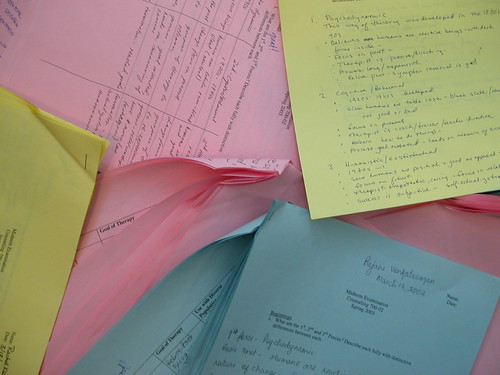
Among the first acts undertaken by teachers in my district school board, is the annual WHMIS training/testing. In short, teachers are reminded of the safety guidelines for working with hazardous materials in the workplace, and then are 'tested' to demonstrate their understanding of related policies, procedures and guidelines.

When it comes to the culminating test, teachers are asked to complete a multiple choice quiz that includes questions drafted with the intent to deceive. Our response: Cheat!

Most teachers undertake the quiz in a group setting where answers are openly shared. Others take the quiz online, with a web browser open to the content of the WHMIS presentation. And in the most extreme cases, educators simply fill in the correct answers as a group, under the direction of the 'teacher'.

Even though the information is presented for the safety and well-being of students and teachers alike, my experience is that most educators demonstrate a genuine disdain for the entire process. While teachers wouldn't give such a test to students without rigid structures in place to ensure the validity of the test, we somehow see it as OK to just wink our way through the exercise.

Maybe it shouldn't bug me so much, but I wish more teachers recognized the folly of such tests when working with their own students!

Image Credit: Keven Law

Monday, May 25, 2009

The Open Exam

Does your course have a culminating exam to assess student knowledge and understanding? Would you like to make such a test a more authentic endeavor?

This 6 minute podcast invites teachers to consider offering 'Open Exams'...


Have I made an effective case?
Do you have experiences with open tests that you can share?

For more of my thinking about exams, visit "When Are Exams Over?".

Photo Credit: Night Owl City

Thursday, October 23, 2008

Let's Teach Them to Cheat!

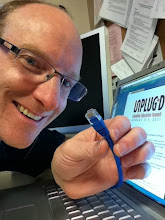
Earlier this week, I had a rare opportunity to have lunch with my identical twin brother. Even though we've taken different paths in our lives, we've each managed to make use of the tools of the evolving web in order to connect with colleagues.

With this common interest, it's no surprise that our conversation consistently returns to the use of the Internet, and a wide range of teaching and learning applications. While waiting for our meals to arrive at our table, I suggested that traditional tests might be rendered useful, if we were to teach students how to cheat in completing them.

While it may sound radical to encourage cheating, students today have grown up in a culture that generally accepts a variety of unsavoury behaviours:
* finding and sharing 'cheat' codes for video games;
* bypassing digital rights management on CD and DVD media;
* using proxy servers to access filtered/blocked/banned web content;
* downloading applications from the web and using 'cracks' to gain access;
* accessing private networks, whether open or password protected;
* cracking digital devices to expand their functionality beyond licensing agreements;
* creating unique works by appropriating the unlicensed photographic or musical expertise of others;
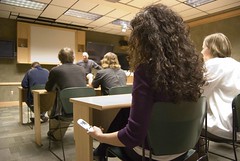
It's no secret that I am on unfriendly terms with the traditional test, so if I had to give students a test today, I think I'd challenge them to respond with limited restrictions. I might allow them to talk to one another; to copy from one another; or to access the internet or outside experts.

What skills might students develop in sanctioned cheating?


In a group or class test:
In copying content from other students, each learner would have to apply critical thinking skills in validating responses. If a class or group had to submit one complete test for the entire group, you'd really be able to assess the collaborative skills possessed by a group or sub-groups. Without a doubt, an observant teacher would be able to see which students had the greatest sharable 'capital', and which had the most effective leadership skills.

In an open book test:
Students would have to condense material into it's most important elements, and would have to organize their resources so that appropriate content could be efficiently accessed.

In a test to design a cheating tool:
Students would highlight their varied abilities to innovate in creating unique uses for personal digital devices; or they might demonstrate their creativity in re-purposing common backpack or lunchbox objects.

In an open computer test:
Beyond exhibiting their search skills, students would be challenged to assess the validity of their sources. Another important skill might be embedded in this activity, were a teacher to require students to provide more than one reference for any test response.

In an open phone test:

Students might have to budget a limited number of text messages or phone-a-friend calls, meaning they'd have to assess their areas of greatest need. Could metacognition skills actually be testable?!

Here's your test question... Use any source you like, but in posting your response below, reference your source(s), and try to provide a level of confidence in your answer.

"How many different times have human beings been to the moon?"

C'mon, you can answer that one can't you? Go ahead and cheat if you like!


Photo Credit: Mr. Stein; Billaday

Wednesday, June 11, 2008

Exams as Circumstantial Evidence

While our high school students prepare for final exams, I'm left to ponder how these snapshots came to yield so much weight.

In a discussion with colleagues earlier today, I suggested that the written test is best considered as 'circumstantial evidence' of student learning. More often than not, and exam indicates little more than which student studied, and to what degree they paid attention to the right material.

Rather than rely on the information provided on a written test, I await the day that teachers rely on anecdotal evidence as the best measure of student learning. Certainly an educator's first-hand observations taken in documentation of rich performance tasks, or culminating projects would be more telling than first draft handwritten exam responses. Teacher-student discussions in the midst of such experiences allow all types of learners to 'show what they know'.

It was back in April when members of the blogosphere publicly debated in response to Will Richardson's query "When Are We Going to Stop Giving Kids Tests That They Can Cheat On?" The shortest blog post I've read this year, generated great discussion on this topic.

As experts in learning, it is teachers themselves who need to rally against the traditional exam. While it will take a special teacher to even open this conversation in a staff room, the discussion following Will's post is a terrific place to begin the dialogue.


For a humourous example of how I survived oral exams in university, you might be interested in re-visiting the "Tale of the Tell-tale Toes" episode of the Teacher 2.0 podcast.
New today: Choice Matters.

Photo Credit: ccarlstead; beatsrhymesnlife

Wednesday, April 2, 2008

Cheating the Test

How rapidly can a topic of discussion take over the consciousness of the Blogosphere!

Tony Vincent at Learning in Hand may have started it by gathering YouTube 'How-to-Cheat' videos. But it didn't take long for edu-bloggers with huge audiences to follow suit.

Steve Dembo at Teach 42 joined the discussion:

"On a typical test, in a typical classroom, does anybody reading this honestly think they can prevent a highly determined student from cheating?"


And when Will Richardson at Weblogg-ed joined the discussion, he did so with a 'twitteresque' title: "When Are We Going to Stop Giving Kids Tests That They Can Cheat On?" and without contributing content, left the commentary to his network. Tongue-in-cheek I'm wondering: "Is this way of engaging teacher-learners to write your blog 'cheating'?" Like Pooh Bear to Hunny, educators are chiming in... 30+ comments in only 6 hours!

For the record, this topic is near and dear to my heart as someone working to assist teachers in leveraging e-learning solutions. With online courses now being shared province-wide, the customization of tests and assignments is necessary in order to validly assess the learning of online students.

"What types of tests are relevant?

If a test is going to be similar to a real world experience, then the most relevant test should have the following characteristics:

1] The test should allow students access to any information system available (the Internet; Wikipedia; news sources; personal networks…).

2] The test should demand that students ‘apply information’ to a context or situation, rather than simply restate ‘learned’ facts.

3] The test should offer students a range of ways to respond (the written word; audio recording; product dev’t; physical demonstration…).


A ‘test’ of this type is more likely a ‘performance task’; and although this type of test wouldn’t be easy to administer, it would provide the truest test of one’s learning. Thank goodness we don’t provide driver’s licenses, pilot’s licenses, or dental licenses on the basis of the written test!"


Photo Credit: dcJohn

Saturday, March 8, 2008

Expelled for 'Studying' on Facebook

First year computer engineering student Chris Avenir is facing expulsion after a teacher at Ryerson University discovered a Facebook group set up to share tips and answers to an online testing system.

Will this action result in a culture of fear among students who participate in study groups online?

I agree with Jesse Hirsh who is quoted in on online Canwest article:

"The online culture is outpacing the curriculum and education system," said Jesse Hirsh, who has been studying social websites for more than a decade. "These students are being smart and using the Internet the way that it should be used. This is the future of education."


I find it ironic that The student is studying 'Computer Engineering" and the administration at Ryerson is upset that he and well over 100 of his classmates are leveraging technology to share strategies on beating the technology-based assessment system used at the Toronto school.

In stark contrast to traditional testing and exams, "Studio Learning" first caught my attention in November of 2004, when I read an article on 'New Jersey Institute Of Technology Pioneers New Way To Teach Engineers'. At the time, I was surprised that tens of thousands of dollars were being granted to a 'novel teaching method' that I'd been employing with elementary students for years! Read bioengineering associate professor Richard Foulds' take on the effectiveness of his approach.

Rather than come down on students who have designed creative solutions to 'beat the system'... It's time that universities join others in developing rich assessment opportunities that engage students in solving authentic problems.

Photo Credit: Grant Hutchinson
Teacher 2.0 Pocast: Cheating on Facebook